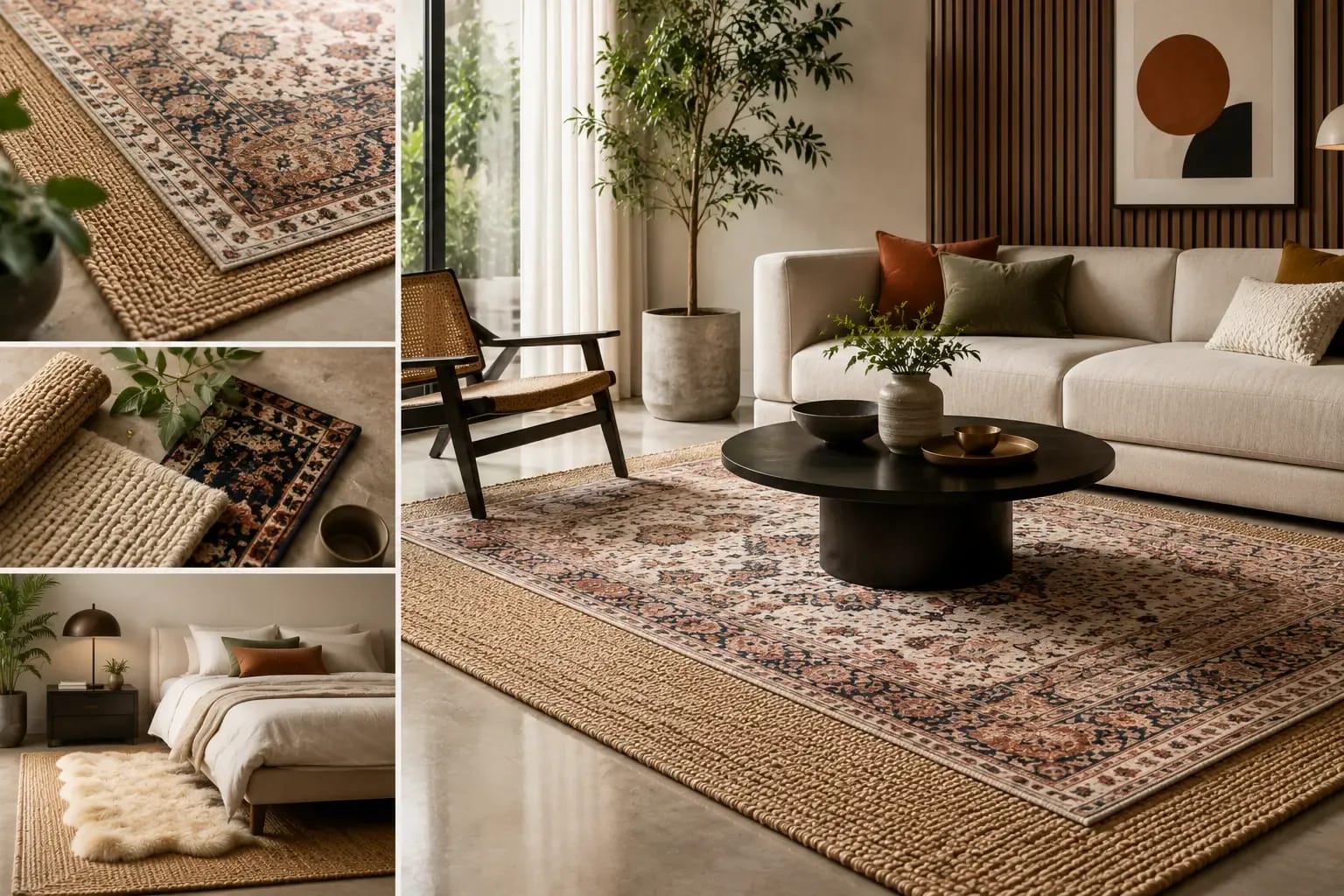
How to Layer Rugs in Indian Homes: A Beginner's Styling Guide
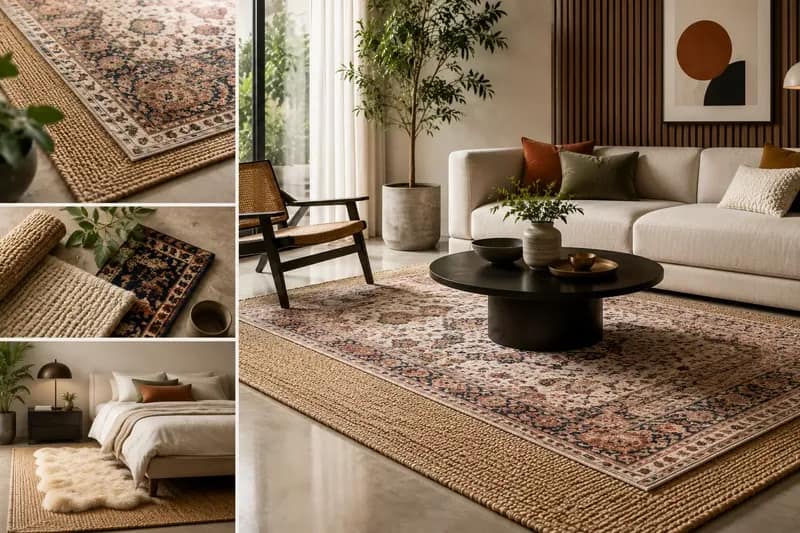
Learning how to layer rugs India style is one of the most impactful and affordable interior design techniques you can apply in your home. Rug layering — placing one rug on top of another — creates visual depth, textural richness, and a curated, collected aesthetic that no single rug can achieve alone. The technique has deep roots in traditional Indian home decor, where layering textiles, mixing patterns, and combining materials has always been an expression of abundance and creative confidence.
At Rug Store, we are often asked by customers in Delhi, Mumbai, Bangalore, and Hyderabad how to make their rooms feel more designed and intentional without a full renovation. Rug layering is almost always our first recommendation. This guide explains exactly how to do it well — and how to avoid the common mistakes that make it look cluttered rather than considered.
What Is Rug Layering and Why Does It Work
Rug layering is the practice of placing a smaller, more decorative rug on top of a larger, more neutral base rug. The base rug defines the furniture zone and provides visual grounding. The top rug introduces colour, pattern, texture, and personality. Together, they create a layered composition that reads as intentional and sophisticated.
The technique works in Indian homes for several practical reasons beyond aesthetics. Many Indian apartments have older flooring — ageing marble, worn tiles, or plain cement — that is functional but not beautiful. A large jute base rug covers the floor surface entirely, and a colourful tufted rug on top adds the decorative layer. Seasonal rotation also becomes easier when you maintain a permanent base layer and swap only the accent rug.
The Best Base Rugs for Layering
The base rug in a layered arrangement needs to be large, relatively flat, and relatively neutral. Its job is to define the zone and provide visual grounding — not to compete with the top rug.
Jute Flat-Weave: The Natural Base
A large jute flat-weave rug is the most popular base for rug layering in India, and for good reason. Jute is naturally earthy and textural — it reads as neutral without being boring. Its flat construction means the top rug sits flush with minimal bunching or movement. And jute's natural material story complements almost any style of accent rug, from bold geometric to traditional floral. Explore jute options at rugstore.in/online-carpet-store/rugs-carpets/jute-rugs/ in sizes up to 8x10 ft.
Natural Sisal: Structured and Clean
Natural sisal has a slightly more structured, grid-like texture than jute. It is extremely firm and flat — an ideal base for a bold, colourful top rug. Sisal pairs especially well with geometric patterned tufted rugs, creating a clean contrast between the natural base weave and the colourful pile above.
Cotton Flat-Weave Dhurrie: Practical and Versatile
A cotton dhurrie in a simple stripe or solid colour makes an excellent base rug in dining rooms and kids rooms — areas where the base layer may need to be washed. Dhurries are flat, lightweight, and machine washable, making them the most practical base option for Indian households.
The Best Top Rugs for Layering
The top rug is where personality enters the composition. It should be smaller than the base rug, more decorative, and it can be as bold as you like.
Shaggy Rugs as Accent Layers
A shaggy rug layered on a flat-weave jute base creates one of the most satisfying textural contrasts available. The softness of the shaggy pile against the rough, natural jute is tactile and visually rich. Position a 4x6 ft shaggy rug centred on an 8x10 ft jute base in a living room — the shaggy piece becomes a tactile island in the middle of the furniture arrangement. Browse shaggy options at rugstore.in/online-carpet-store/rugs-carpets/shaggy-rugs/.
Hand-Tufted Accent Rugs
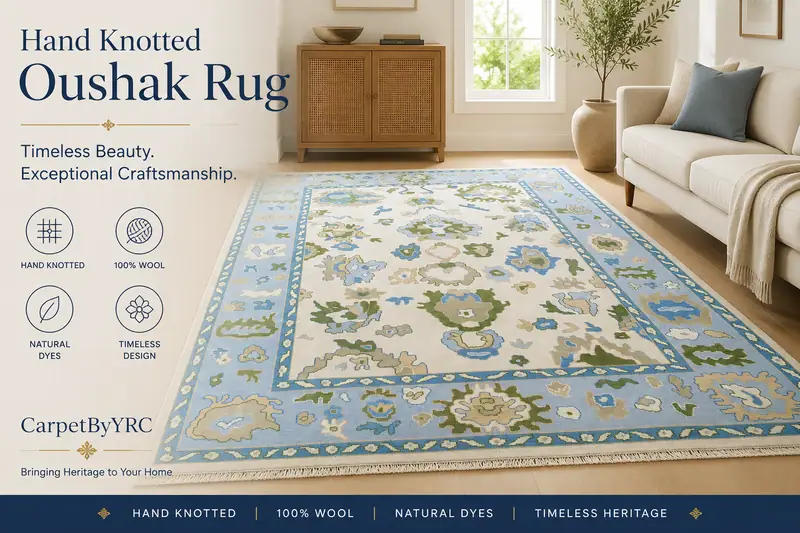
A hand-tufted rug with a bold pattern — Persian medallion, geometric repeat, or abstract — makes the most impactful top layer. The pile height and design complexity create visual interest that elevates the entire room. At Rug Store, our Bhadohi-made hand-tufted rugs at rugstore.in/online-carpet-store/rugs-carpets/hand-tufted-rugs/ are available in sizes from 2x3 ft to 5x8 ft — perfect for accent layering.
Faux Sheepskin and Accent Throws
For bedroom layering, a small faux sheepskin or plush accent rug at the foot of the bed, laid over a larger flat-weave, creates a luxurious morning-routine focal point. This is the most minimal form of layering — easy to try, easy to change seasonally.
Size Rules: Getting the Proportions Right
Proportion is everything in rug layering. The most important rule is that the base rug should be at least 2 feet larger than the top rug on all sides — ideally 2–3 feet. This ensures a clear visual border of the base rug is visible around the accent piece, creating the layered effect rather than just two rugs awkwardly touching each other.
- Base rug 8x10 ft + top rug 4x6 ft: Classic living room combination. 2 ft border on all sides.
- Base rug 6x9 ft + top rug 3x5 ft: Good for medium-sized bedrooms and dining rooms.
- Base rug 5x8 ft + top rug 2x3 ft or 3x3 ft: Works as a bedside accent layer.
- Avoid: Two rugs of the same size — creates a confusing visual boundary instead of layering.
- Avoid: Base rug smaller than 6x9 ft for living room use — insufficient for the proportion to read correctly.
Pattern and Colour Mixing Rules
Pattern mixing in rug layering follows one simple rule: one patterned rug, one solid or textural rug. Two heavily patterned rugs compete visually and produce a cluttered result. The exceptions are when both patterns belong to the same family (two geometric patterns in complementary scales can work) or when the colour palette is tightly controlled.
- Patterned base + solid top: Understated. The pattern peeks from below and frames the accent piece.
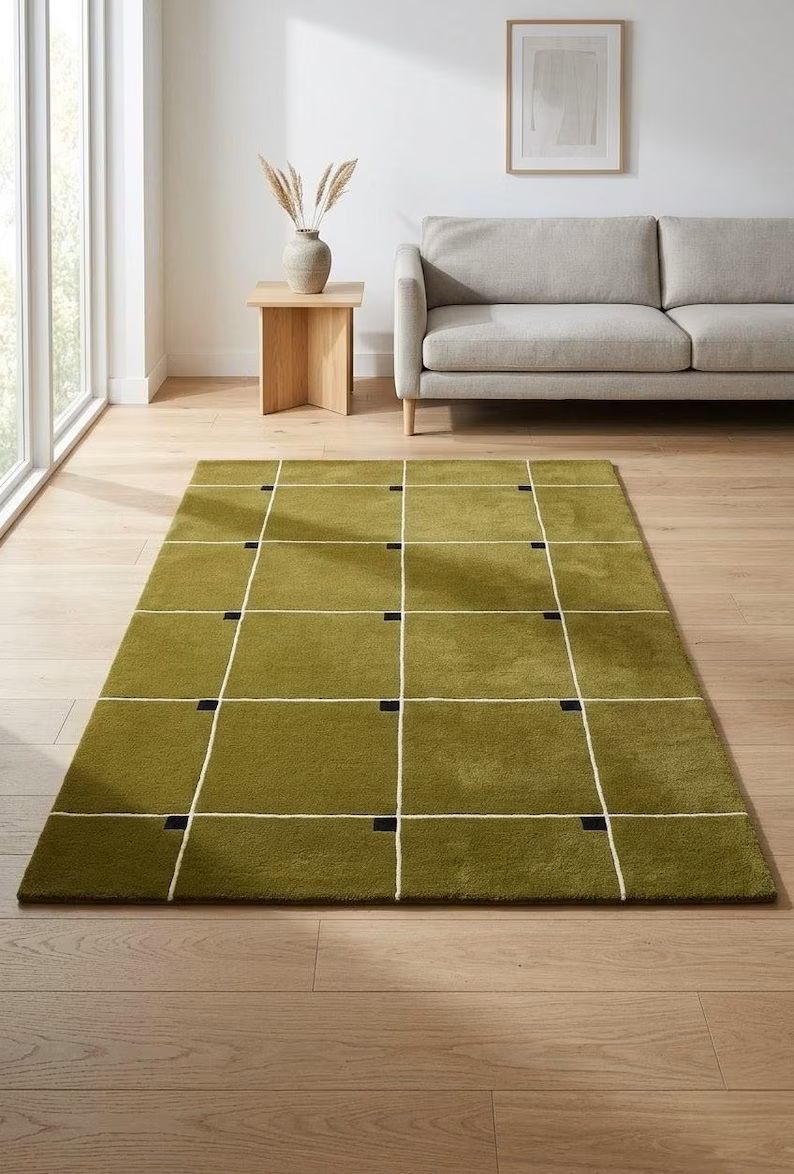
- Solid or textural base + patterned top: The most common and successful approach. Jute base, bold geometric tufted top.
- Two geometric patterns: Can work if one is large-scale and one is small-scale, in the same colour family.
- Two florals: Avoid. Too visually complex.
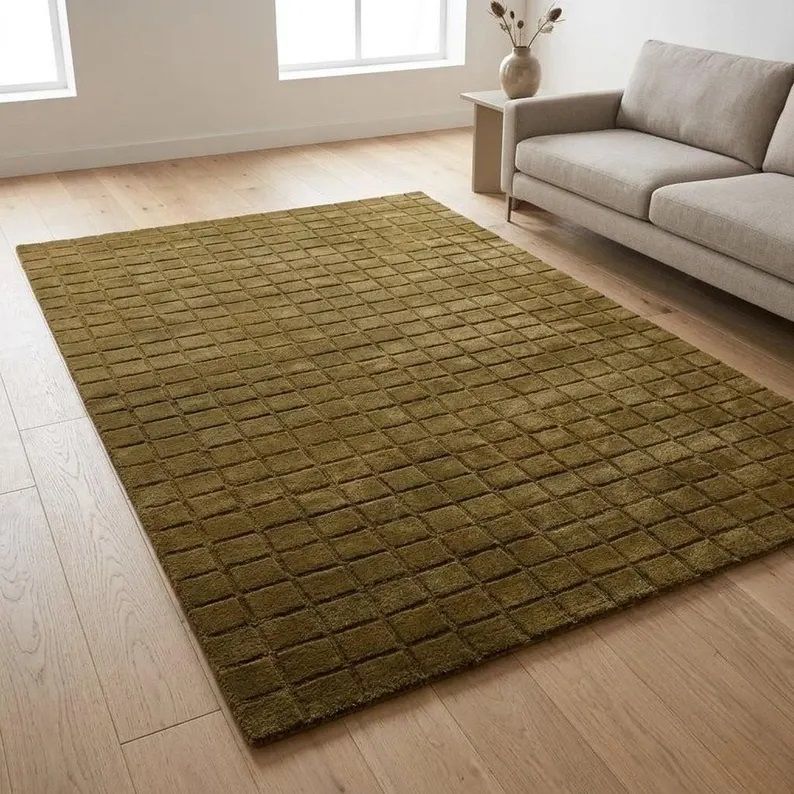
- Two solids: Perfectly fine. The layering reads through texture difference rather than pattern difference.
For colour, the safest approach in Indian homes is a warm neutral base (natural jute, ivory cotton, warm beige) with a colour accent on the top rug. The accent rug colour should echo at least one other element in the room — a cushion, a throw, a piece of art — for visual cohesion.
Room-by-Room Layering Guide for Indian Homes
Living Room: The Main Event
The living room is the primary location for rug layering in Indian homes. A 8x10 ft or 9x12 ft natural jute base under the sofa arrangement, with a 4x6 ft or 5x7 ft bold hand-tufted accent centred in the seating zone, creates a genuinely designed look. In a large 3BHK drawing room, you can extend this further — a sisal base across the entire room with two accent rugs, one in the seating zone and one under the coffee table.
Bedroom: Bedside Accent Layering
In most Indian 2BHK bedrooms, full-floor layering is impractical due to space constraints. Instead, use accent-layer layering: a large flat-weave bedroom carpet at rugstore.in/online-carpet-store/rugs-carpets/bedroom-carpet/ covering most of the floor, with small accent rugs on each side of the bed. This creates a soft landing underfoot while getting out of bed and adds visual interest to the floor plane.
Compact 2BHK Apartments
In compact 2BHK apartments where the living room is also the dining area, full-floor rug layering can make the space feel smaller. The better approach is targeted bedside layering and a single well-chosen base rug in the living area. Reserve the full layering treatment for larger spaces.
What Not to Do: Common Layering Mistakes
- Two shaggy rugs: The edges create a trip hazard and the pile-on-pile looks unkempt.
- Same-size rugs: Looks accidental, not intentional. Always size down the top rug.
- Clashing strong patterns: Two large-scale busy patterns at the same scale creates visual chaos.
- Top rug not centred: An off-centre top rug on a base rug looks like a mistake. Always centre carefully.
- Ignoring anchoring: In high-traffic areas, use a non-slip pad between the two rugs to prevent the top rug from shifting.
Frequently Asked Questions
What is rug layering?
Rug layering is the interior design practice of placing a smaller, more decorative rug on top of a larger base rug. The technique creates visual depth, textural richness, and a curated aesthetic. The base rug (usually flat-weave and neutral) defines the space; the top rug (often patterned or textured) adds personality and colour. It is one of the most cost-effective ways to transform a room.
How do you layer rugs without it looking messy?
Follow three rules: size the top rug at least 2 feet smaller than the base rug on all sides, use a patterned top rug on a solid or textural base (or vice versa), and centre the top rug precisely on the base. A non-slip pad between the two rugs keeps the top layer from shifting and eliminates the crumpled appearance that makes layering look messy.
What size rugs to use for layering?
For a standard Indian living room, an 8x10 ft base rug with a 4x6 ft or 5x7 ft accent top rug is the most common and effective combination. For bedrooms, a 6x9 ft base with a 2x3 ft or 3x5 ft bedside accent works well. The key principle is that the base rug should be 2–3 feet larger than the top rug on all sides to create a clear visual frame.
Does layering work for Indian homes?
Yes — rug layering is exceptionally well suited to Indian interiors. The eclectic mixing of patterns, textures, and materials has deep roots in Indian textile traditions. It works particularly well in 3BHK apartments and independent homes with larger living rooms. In compact 2BHK apartments, targeted accent layering at the bedside is a more appropriate scale. Layering also provides practical benefits — covering older flooring, enabling seasonal rotation without the cost of fully replacing rugs.
What material combinations work for layered rugs?
The best material combinations are: jute flat-weave base with a hand-tufted wool top, natural sisal base with a bold geometric tufted top, cotton dhurrie base with a shaggy accent top, and large flat-weave base with a small faux sheepskin bedside accent. Browse base rug options at rugstore.in/online-carpet-store/rugs-carpets/jute-rugs/ and accent options at rugstore.in/online-carpet-store/rugs-carpets/hand-tufted-rugs/ to find complementary pairs.
-800x451.webp&w=1920&q=72)