Knowing how to clean a carpet in India is genuinely different from following carpet care advice written for Western climates. India's combination of intense summer dust, monsoon humidity, festival season traffic, and year-round barefoot indoor living creates carpet care challenges that require India-specific guidance. This complete how-to-clean carpet India guide covers every major carpet type — jute, shaggy, wool, silk/viscose, leather, and synthetic — with step-by-step cleaning methods, frequency recommendations, what to avoid, and expert DIY tips from our team at Rug Store.
At Rug Store, we manufacture all our carpets in Bhadohi, Uttar Pradesh — India's carpet capital — and we have seen firsthand how Indian homes treat their carpets. The most common carpet damage we encounter is not from heavy use but from incorrect cleaning: wrong cleaning agents, too much water, or delayed response to spills. This guide will help you avoid those mistakes and extend the life of your carpet significantly.
Why Carpet Cleaning in India Is Different
Before diving into specific methods, it is worth understanding the specific challenges Indian homes present for carpet maintenance:
- Dust: North Indian cities generate exceptional dust levels, especially in pre-monsoon months. Carpets need more frequent vacuuming than in Western countries.
- Humidity: Monsoon humidity (60–90% in coastal cities) creates mould and mildew risk in any carpet that stays damp.
- Barefoot culture: Indian homes are shoes-off environments — carpets face body oil, sweat, and moisture from bare feet rather than street dirt from shoes.
- Spice and food: Indian cooking involves oily, brightly coloured spices and sauces. Turmeric stains in particular are notoriously difficult to remove.
- Festival traffic: Diwali, Holi, Eid, Navratri — Indian festivals bring extra foot traffic, incense ash, rangoli powder, and food spills.
Carpet Type Cleaning Guide — Quick Reference
Before applying any cleaning method, identify your carpet type. The table below summarises the recommended approach for each carpet type commonly found in Indian homes:
- Jute | Dry vacuuming + dry powder for stains | Weekly vacuum, monthly spot-check | Never wet-wash; avoid moisture; no steam cleaning
- Wool hand-tufted | Vacuuming + cold-water spot clean + annual professional wet clean | Vacuum twice weekly; professional clean annually | No hot water; no harsh detergents; no beater-bar vacuum
- Viscose / Art Silk | Dry vacuuming + dry-clean only for stains | Vacuum weekly; dry clean annually | Never wet-clean; water causes permanent fibre distortion
- Shaggy (polyester) | Suction vacuum + mild detergent spot clean | Vacuum twice weekly; professional clean once per year | No rotating brush bar; do not aggressive scrub
- Shaggy (wool) | Suction vacuum + cold water spot clean + professional clean | Vacuum twice weekly; professional clean annually | No hot water; no alkaline detergents
- Leather patchwork | Wipe with slightly damp cloth + leather conditioner | Monthly wipe-down; condition quarterly | No soaking; no harsh chemicals; no steam
- Silk (pure) | Dry clean only — no DIY cleaning | Periodic professional dry clean | Absolutely no water; no home cleaning of any kind
- Cotton flat-weave | Machine wash (small sizes) or wet-clean | Wash monthly for dining/high traffic | Avoid dryer for large sizes; air dry fully before use
How to Clean a Jute Rug in India
Jute is one of the most popular rug materials in India but also one of the most misunderstood in terms of cleaning. Water is jute's enemy — it causes the natural fibres to swell, can leave brown water-stain rings, and creates mould conditions in Indian humidity.
Regular Jute Rug Maintenance
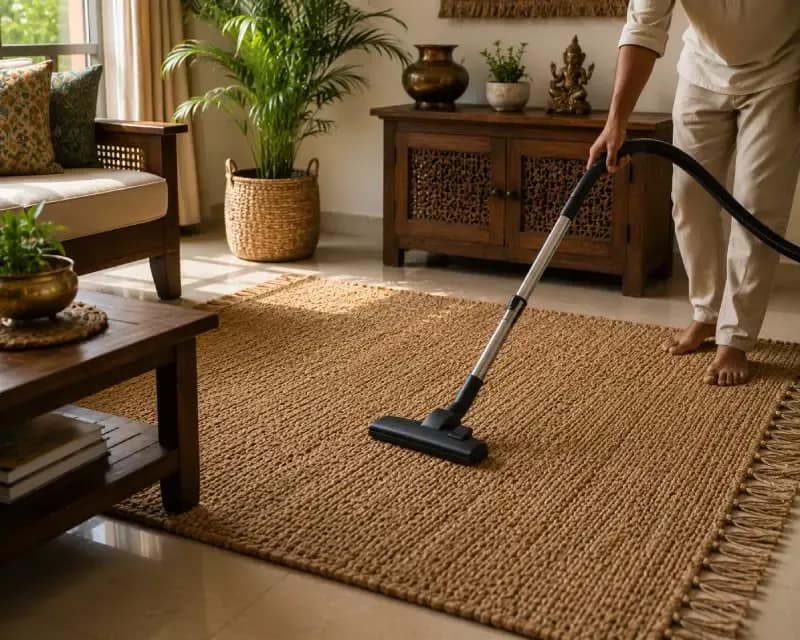
- Vacuum weekly using a suction-only attachment without a beater bar. The beater bar can fray jute's natural fibres.
- Shake smaller jute rugs outdoors weekly to dislodge embedded dust — jute's textured weave traps fine particles.
- Rotate the rug every 3–6 months to ensure even wear and even sun exposure.
Jute Rug Stain Removal
- Blot any liquid spill immediately with a completely dry white cloth. Do not rub — rubbing spreads the stain.
- For solid food spills, gently scrape up the bulk with a spoon before blotting.
- Apply dry cleaning powder (available in Indian home-goods stores) to the stained area. Let it sit for 30–60 minutes, then vacuum up.
- For persistent stains, consult a professional carpet cleaner who specialises in natural fibres.
- Never apply water, liquid detergents, or wet sprays to a jute rug.
If your jute rug develops a musty odour during monsoon, sprinkle a light layer of baking soda over the surface, leave for 1–2 hours, then vacuum thoroughly. This neutralises odour without introducing moisture. Browse our jute rugs collection for care-ready options.
How to Clean a Wool Hand-Tufted Carpet in India
Wool is the most forgiving carpet material to clean — but it still has rules. The biggest mistakes Indian homeowners make with wool carpets: using hot water (shrinks fibres), using alkaline detergents (damages the wool's natural scales), and leaving the carpet damp (mould risk in Indian humidity).
Regular Wool Carpet Maintenance
- Vacuum twice a week in high-traffic areas, once a week in lower-traffic areas. Use a good quality vacuum on the appropriate pile-height setting.
- Immediately blot spills with a dry white cloth — wool absorbs liquid fast, so immediate response is critical.
- Rotate the rug every 6 months to distribute wear and prevent uneven fading.
- Shake or beat smaller wool rugs outdoors periodically. A clean broom handle works well for larger rugs laid over a railing.
Spot Cleaning Wool Carpets
- Blot (never rub) any liquid spill immediately. Work from the outside edge of the spill inward to avoid spreading.
- Mix 1 teaspoon of mild liquid detergent (pH-neutral, wool-safe) in 1 cup of cold water. Apply a small amount to a clean cloth and blot the stain gently.
- Rinse by blotting with a cloth dampened with plain cold water only.
- Blot dry with a fresh dry cloth. Place a dry towel over the area and press down to absorb remaining moisture.
- Allow to dry completely with good ventilation — a fan or ceiling fan helps speed drying in Indian humidity.
For Indian-specific stains: turmeric stains respond to a paste of baking soda and cold water left on the stain for 30 minutes before blotting and rinsing. Coconut oil stains: sprinkle cornflour to absorb the oil, vacuum, then spot clean with cold water and mild detergent. Holi colours: blot immediately with cold water before the colour sets. Browse our hand-tufted rugs collection.
How to Clean a Viscose or Art Silk Carpet in India
Viscose carpets require the most caution of any material we manufacture. Water is the primary enemy of viscose — even a small amount of water can cause the cellulose fibres to distort permanently, leaving the pile looking crushed, discoloured, or watermarked.
Viscose Carpet Care Rules
- Vacuum weekly using a suction-only attachment — no beater bar, no rotating brush.
- For any liquid spill: immediately blot with a completely dry white cloth. Do not add any moisture. Keep blotting until no more liquid transfers to the cloth.
- For dry debris: vacuum gently.
- For stains that require treatment: use a dry carpet cleaning powder or take to a professional dry cleaner. Never apply any liquid cleaner.
- Annual dry cleaning by a professional carpet cleaner is essential for viscose carpets — it is the only safe deep-clean method.
How to Clean a Shaggy Carpet in India
The deep pile of shaggy carpets traps dirt at a level that ordinary surface vacuuming does not reach. This requires a specific approach for effective cleaning.
Shaggy Carpet Vacuuming Technique
Set your vacuum to the highest pile setting or use a suction-only attachment. Never use a rotating brush bar on a shaggy rug — it catches on the long fibres and can pull them out. Vacuum slowly and in multiple directions — the long pile tends to lie in one direction; cross-vacuuming dislodges trapped debris from different angles.
Shaggy Rug Deep Cleaning
Periodically take shaggy rugs outdoors and beat them gently. The deep pile releases embedded dust when beaten that vacuuming cannot reach. For polyester shaggy rugs, spot cleaning with diluted mild detergent and a soft brush (gentle, not aggressive) is acceptable. For wool shaggy, use cold water and wool-safe cleaner only.
Professional steam cleaning is not recommended for shaggy rugs because the deep pile retains moisture for a long time after cleaning — a mould risk in Indian humidity. Professional dry cleaning is the preferred professional option. Browse our shaggy rugs collection.
How to Clean a Leather Patchwork Carpet in India
Leather rugs are among the most durable and distinctive flooring options available, and they have uniquely simple care requirements. Our leather rugs are made from genuine leather patches hand-stitched onto a cotton backing in Bhadohi.
- Regular care: Wipe the surface with a slightly damp (not wet) microfibre cloth weekly. Dry immediately with a clean dry cloth.
- Conditioning: Apply a good-quality leather conditioner every 3–4 months to prevent cracking and maintain suppleness — essential in the dry heat of Indian summers.
- Stains: Blot liquid spills immediately. For most stains, a damp cloth followed by leather conditioner is sufficient.
- Never: Soak, wet-wash, machine wash, steam clean, or use alcohol-based cleaners on leather rugs.
- Indian summer care: In very dry seasons, the leather can dry and develop micro-cracks. Regular conditioning prevents this.
Browse our leather rugs collection for patchwork leather rug options.
Annual Professional Carpet Cleaning in India — When and How
Professional cleaning is not a luxury for Indian carpets — it is a necessity given the dust levels, humidity cycles, and festival traffic that Indian carpets endure. The ideal frequency depends on the carpet type, room use, and city:
- Wool and wool-blend carpets: Professional cleaning once per year. Best timing for North India (Delhi, Lucknow, Jaipur): after the summer dust season (June) or after Diwali (November).
- Shaggy carpets in humid cities: Twice per year in Mumbai, Chennai, and Kolkata.
- Viscose carpets: Dry clean once per year — more often if used in high-traffic zones.
- Jute rugs: Professional cleaning is not necessary for properly maintained jute; a thorough beating and vacuuming seasonally is usually sufficient.
- Leather rugs: Occasional professional leather cleaning and reconditioning every 2–3 years.
When selecting a professional carpet cleaner in an Indian city, ask specifically whether they handle natural-fibre rugs and whether they use dry-cleaning or wet-cleaning methods. Not all cleaners understand the specific requirements of viscose or pure silk carpets.
DIY Carpet Freshening Tips for Indian Homes
- Baking soda odour treatment: Sprinkle baking soda generously over any carpet, leave for 1–2 hours, vacuum thoroughly. Neutralises pet, cooking, and general household odours effectively.
- White vinegar solution (wool and synthetic only — never viscose): A very diluted solution of white vinegar in cold water can help remove many Indian food stains. Always test on an inconspicuous area first.
- Ice for chewing gum or wax: Apply ice cubes to harden the substance, then gently break off with a blunt knife. Never pull at warm wax or gum — it embeds deeper.
- Salt for wine and juice spills: Pour salt liberally over a fresh wine or juice spill immediately. The salt absorbs the liquid before it sets. Vacuum up after 5 minutes.
- Sunlight for odours and mould prevention: Periodic outdoor airing in direct sunlight is the single most effective low-effort carpet freshener available to Indian homeowners.
Frequently Asked Questions — How to Clean Carpet India
How do you remove a turmeric stain from a carpet in India?
Act immediately. Make a paste of baking soda and cold water, apply to the stain, and leave for 30 minutes. Gently blot off with a damp cloth (cold water only for wool). Repeat if necessary. Never rub turmeric stains — rubbing spreads them deeper into the pile. For set turmeric stains, professional cleaning is recommended.
How often should you vacuum a carpet in India?
In most Indian cities, twice-weekly vacuuming for main living areas is recommended — more frequently than in Western countries due to India's higher dust levels. Bedrooms can be vacuumed once per week. During peak dust season (April–May in North India), increase to three times per week.
Can I wet-clean a viscose or art silk carpet at home?
No — never wet-clean a viscose or art silk carpet. Water causes the cellulose fibres to distort permanently, leaving visible watermarks and crushed pile. Viscose carpets must be dry cleaned professionally. For accidental spills, blot immediately with a dry cloth and consult a professional cleaner.
What is the best way to clean a carpet during Indian monsoon?
Avoid wet-washing any carpet during monsoon — the high humidity prevents proper drying and creates mould conditions. Focus on dry vacuuming and immediately blotting any moisture with dry cloths. Ensure good ventilation under and around rugs. Schedule professional cleaning for before or after the monsoon season, not during it.
How do I remove Holi colours from a carpet?
Act immediately while the colour is fresh. Blot with cold water repeatedly — do not rub. For dry Holi powder, vacuum first before applying any moisture. A diluted mild detergent solution can be used for wool carpets after initial blotting. For viscose carpets, blot only with dry cloths and consult a professional cleaner. Set Holi stains are very difficult to remove at home; professional carpet cleaning is strongly recommended.


-800x451.webp&w=1920&q=72)