Hand Knotted vs Hand Tufted Carpet — What Is the Difference?
If you have been trying to understand the difference between hand knotted and hand tufted carpets in India, you are not alone. These two terms are often used interchangeably — and incorrectly — by sellers, buyers, and even interior designers. They describe fundamentally different manufacturing processes that result in carpets with very different quality profiles, price points, lifespans, and ideal uses. This complete guide explains the difference clearly, with a comparison table, real price ranges, and a direct recommendation for every type of Indian homebuyer in 2026.
At Rug Store, we manufacture hand-tufted carpets in our Bhadohi, Uttar Pradesh workshop. Bhadohi is the carpet capital of India — and home to both hand-knotted and hand-tufted traditions. Our artisans understand both processes intimately, which is the basis for the honest comparison you will find below.
What Is a Hand Knotted Carpet?
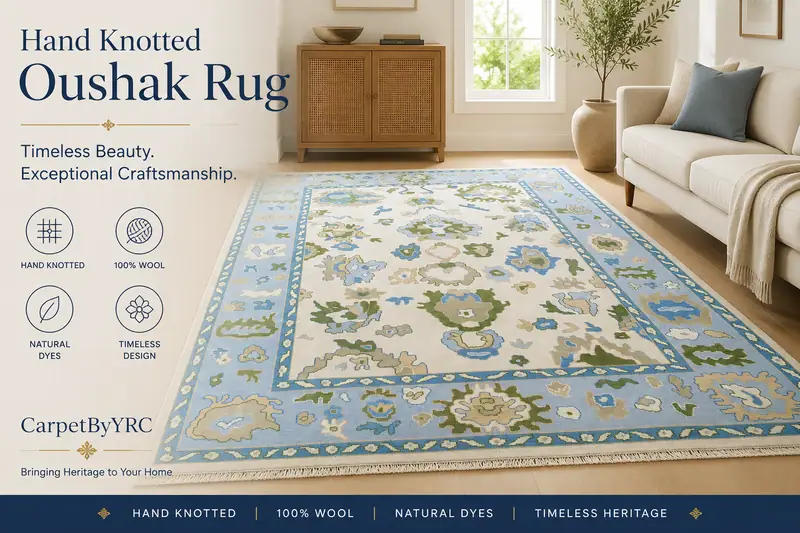
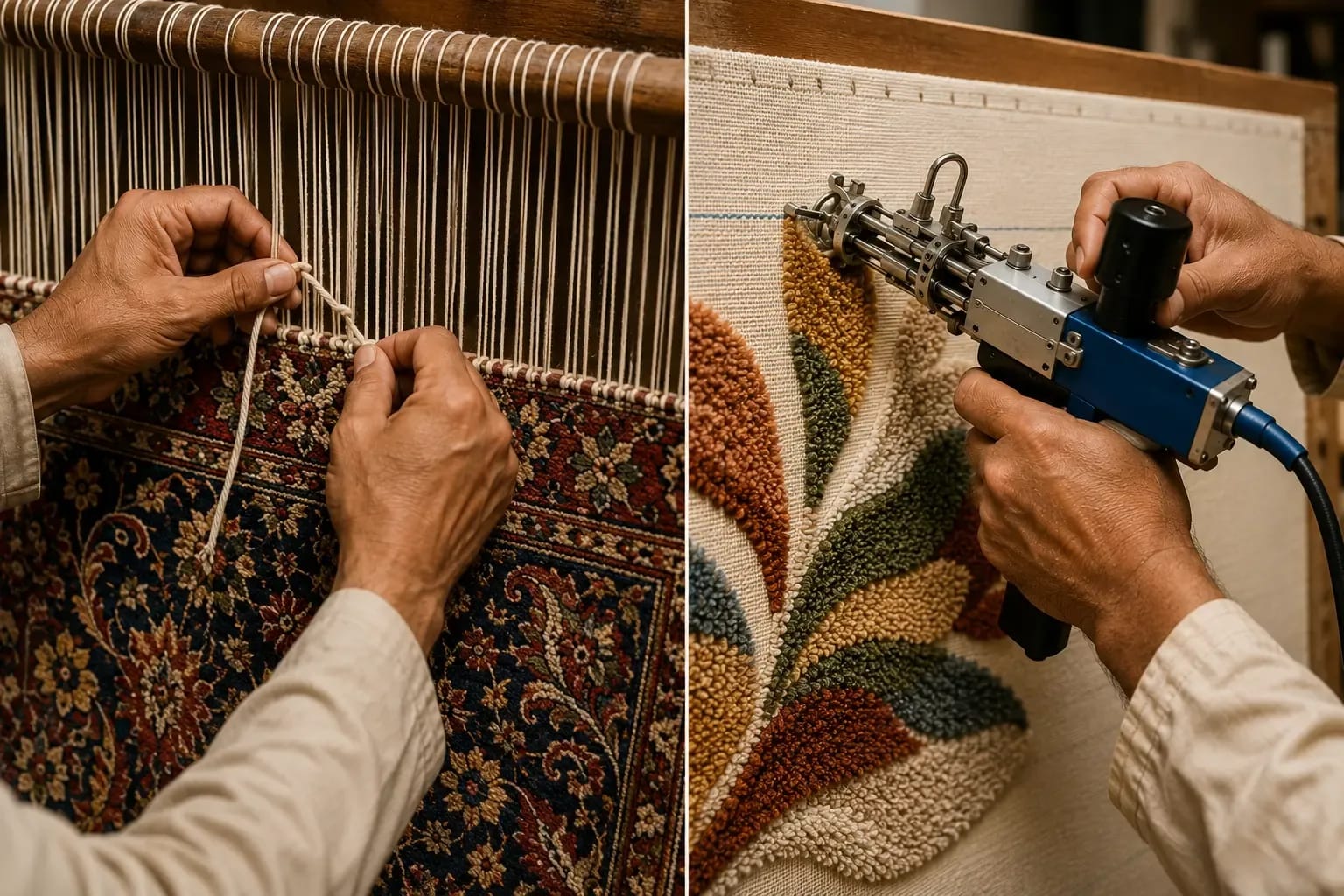
A hand-knotted carpet is made on a vertical loom by skilled artisans who tie individual knots — one at a time — around pairs of vertical warp threads. Two principal knotting techniques exist: the Turkish (Ghiordes) knot, which wraps around two warp threads and has a more open pile; and the Persian (Senneh) knot, which wraps around one warp thread and allows greater design fineness.
The density of knots is measured in KPSI — knots per square inch. A basic hand-knotted carpet might have 50–80 KPSI. A fine Persian-style carpet has 200–400 KPSI. Extremely fine Kashmiri silk carpets can exceed 600 KPSI. Higher KPSI means finer design detail, greater durability, and significantly higher price.
The fundamental characteristic of hand-knotted carpets: the pile is structurally integrated into the foundation of the carpet. Every individual tuft of yarn is tied directly to the warp — there is no backing material holding the pile. This structural integrity is why quality hand-knotted carpets last 50–100 years or more.
What Is a Hand Tufted Carpet?
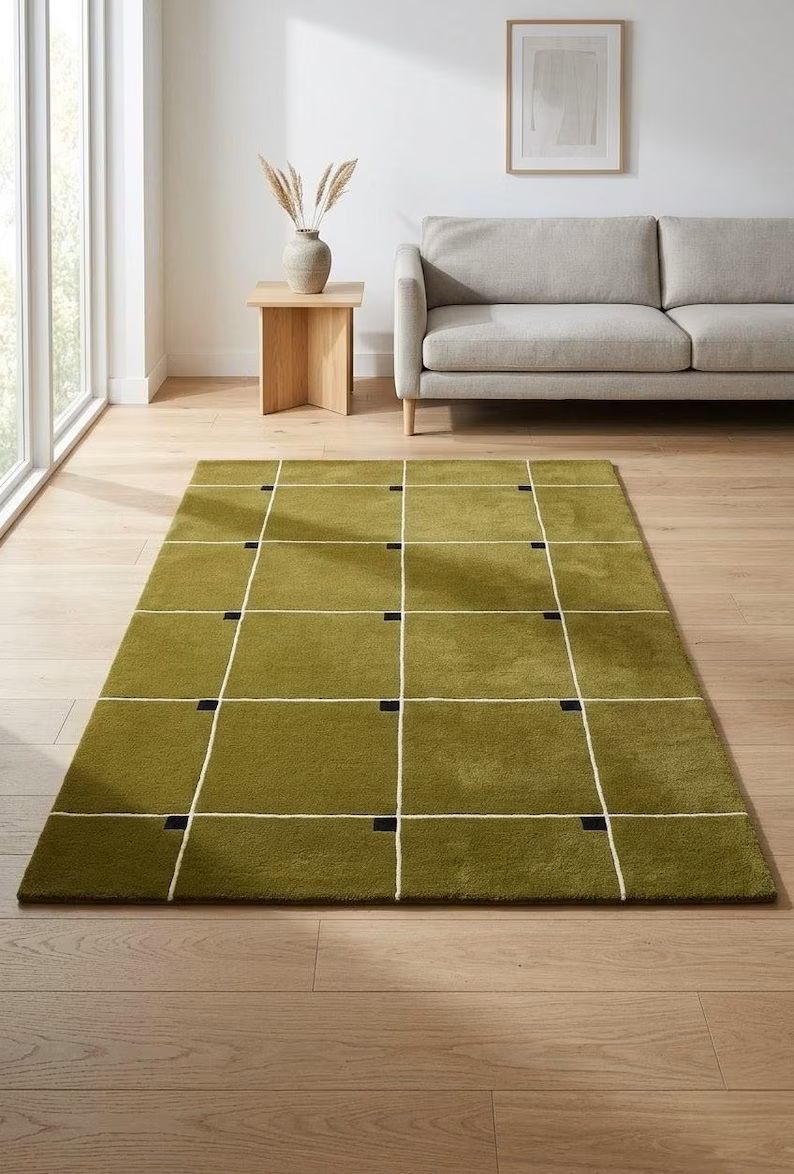
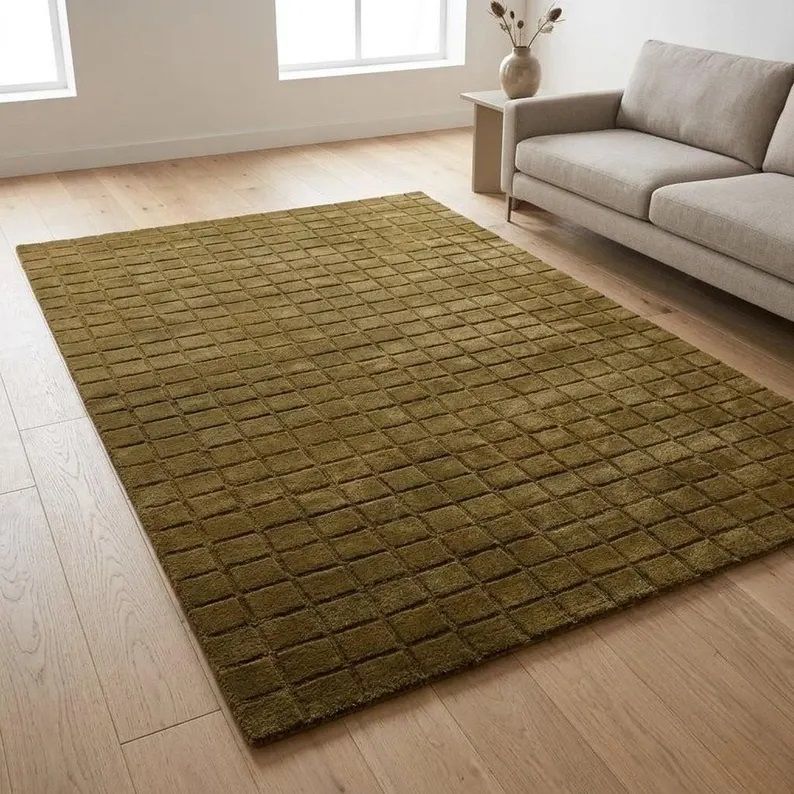
A hand-tufted carpet is made using a handheld pneumatic tufting gun that punches loops of yarn through a stretched primary canvas backing. The artisan guides the gun across a pattern stencil, row by row, creating the pile on the canvas. Once the entire design is complete, the back is coated with liquid latex to lock the yarn tufts in place. A secondary backing cloth — typically cotton — is applied over the latex to finish the carpet.
The key structural difference from hand-knotted: in a hand-tufted carpet, the pile is held in place by the latex adhesive, not by structural integration with the warp. This is a meaningful durability difference but also a significant cost difference — a skilled artisan can tuft a 6x9 ft carpet in 3–5 days, versus weeks or months for the equivalent in hand-knotted.
Hand-tufted carpets are genuinely handmade — every design decision, colour placement, and pile variation is made by a human craftsperson. Our Bhadohi artisans bring decades of skill and design expertise to the tufting process. But the technique is categorically different from hand-knotting.
Hand Knotted vs Hand Tufted — Feature Comparison
The following comparison covers the key differences that matter for Indian homebuyers:
- Construction | Each knot individually tied around warp threads (no backing) | Yarn tufted through canvas backing; held by latex adhesive
- Pile attachment | Structural — woven into the foundation | Adhesive — held by latex backing
- Production time | Weeks to years for large pieces | Days to weeks for equivalent size
- Lifespan | 50–100+ years with proper care | 15–25 years with proper care (quality dependent)
- Knot density | 50–600+ KPSI | Not applicable — measured by pile density (tufts per sq inch)
- Design fineness | Extremely fine detail possible at high KPSI | Good detail; fine detail limited by tufting gun size
- Price | Hand Knotted: Significantly higher — reflects months of skilled artisan labour | Hand Tufted: More accessible — genuine handcraft at a realistic price for Indian homeowners
- Repair and restoration | Can be re-knotted by skilled artisans | Difficult to repair pile separation; usually replaced
- Reversibility | Pattern visible from reverse (carpet-quality test) | Latex backing on reverse; pattern not fully visible
- Best use | Investment pieces, heirloom quality, collectors | Quality handmade floor coverings, value-driven buyers
- Ideal for | Formal rooms, premium properties, long-term investment | All room types, all home sizes, everyday use
Craftsmanship and Time — Why Hand Knotted Costs More
The hand-knotted carpet's price premium is entirely explained by time. A 6x9 ft hand-knotted carpet with a medium knot density of 100 KPSI contains approximately 583,200 individual hand-tied knots. A skilled artisan tying 10,000 knots per day would take approximately 58 working days — nearly three months — to complete the carpet alone. Fine-density carpets (250+ KPSI) can take 6–12 months or more.
This is not markup or speculation — it is direct artisan labour. The carpet is literally worth months of skilled human work. Bhadohi and Kashmir hand-knotted carpets are among India's most valuable export goods, with the finest pieces fetching prices equivalent to fine art. When you buy a hand-knotted carpet, you are acquiring something that genuinely cannot be produced quickly.
How to Tell Hand Knotted from Hand Tufted
The most reliable method is the flip test. Turn the rug over and look at the back:
- Hand knotted: The pattern is clearly visible as an exact mirror of the front. You will see individual knot tails on the back, and the weave looks like fabric — warp and weft visible with no backing material.
- Hand tufted: The back is coated in latex (often visible as a cream or tan rubbery layer) and covered with a secondary cotton or synthetic backing cloth. You cannot see the pattern clearly from the back.
A second method: examine the pile at a cut edge (if any is visible). In hand-knotted carpets, cutting through the pile reveals the individual knot structure. In hand-tufted carpets, the latex layer is clearly visible as a separate layer behind the pile.
Which Is Right for Your Indian Home?
Choose Hand Knotted If:
- You are purchasing a long-term investment piece — a carpet you plan to pass to the next generation.
- You are furnishing a formal drawing room, guest room, or luxury apartment where heirloom quality is appropriate.
- You want the best possible longevity for a single investment-grade carpet.
- You collect traditional Indian craft and appreciate the cultural significance of Bhadohi, Kashmiri, or Jaipur hand-knotted work.
Choose Hand Tufted If:
- You want a quality handmade carpet for everyday use at a price that makes sense for a standard Indian home.
- You want the best possible everyday carpet at an accessible price.
- You are furnishing multiple rooms and want consistent handmade quality across bedrooms, living room, and dining room.
- You want a carpet that looks and feels handmade without the premium price of hand-knotted.
- You are open to replacing the carpet in 15–20 years as your style or living situation changes.
Price Ranges in India 2026
- Hand-tufted carpets range from budget-friendly viscose options up to premium pure wool pieces — browse our hand-tufted rugs collection for current pricing. Hand-knotted carpets are investment-grade; price escalates with KPSI count and material quality. Contact us for hand-knotted enquiries and current availability.
At Rug Store, our manufacturing expertise is in hand-tufted carpets, covering the full spectrum from entry-level to premium quality. Browse our hand-tufted rugs collection for current options and pricing.
Bhadohi — Where Both Traditions Meet
Bhadohi, Uttar Pradesh is unique in India in maintaining both hand-knotting and hand-tufting traditions at scale. The region has been the production centre for hand-knotted export carpets since the Mughal era, when Persian weaving techniques were introduced by royal patronage. The hand-tufting technique arrived in the latter half of the 20th century as a way to democratise high-quality handmade carpet production.
Today, Bhadohi artisans are some of the most skilled carpet craftspeople in the world, practising both traditions. The Bhadohi-Mirzapur-Varanasi carpet belt accounts for a major share of India's carpet exports and centuries of weaving heritage. Every Rug Store carpet carries this heritage.
Frequently Asked Questions — Hand Knotted vs Hand Tufted Carpet India
What is the main difference between hand knotted and hand tufted carpets?
In a hand-knotted carpet, every individual tuft of yarn is tied by hand directly around the warp threads of the carpet — making the pile structurally part of the carpet. In a hand-tufted carpet, yarn is punched through a backing canvas using a tufting gun and held in place by a latex adhesive applied to the back. Hand-knotted carpets last significantly longer and cost significantly more.
How long do hand tufted carpets last compared to hand knotted?
A quality hand-knotted carpet with proper care can last 50–100 years or more. A quality hand-tufted carpet with proper care (regular vacuuming, annual professional cleaning, rug pad) realistically lasts 15–25 years. The difference is the structural integrity of the pile attachment method.
Is a hand tufted carpet worth buying?
Absolutely yes — for most Indian homebuyers, hand-tufted carpets are the optimal choice. They offer genuine artisan craftsmanship at accessible price points, making quality handmade floor coverings realistic for any home. A well-made hand-tufted carpet from Bhadohi will serve a typical Indian family for 15–20 years with basic maintenance.
How can I tell if a carpet is hand knotted or hand tufted?
Flip the carpet and examine the back. A hand-knotted carpet shows the knot tails and the warp-and-weft weave clearly on the back — no backing material, pattern fully visible. A hand-tufted carpet has a latex-coated back covered with a secondary backing cloth — you cannot clearly see the pile structure from the back.
Which is better for Indian homes — hand knotted or hand tufted?
For the vast majority of Indian homebuyers, hand-tufted is the more practical choice. It delivers handmade quality, artisan design, and natural materials at prices that are realistic for furnishing an Indian home. Hand-knotted is the right choice for premium investment purchases — buying a piece that will outlive its generation and potentially increase in value over time.
-800x451.webp&w=1920&q=72)