Hand Knotted Rugs India: The Complete Buying Guide 2026
By Akshata
Rugs at Factory PriceShop All Rugs.
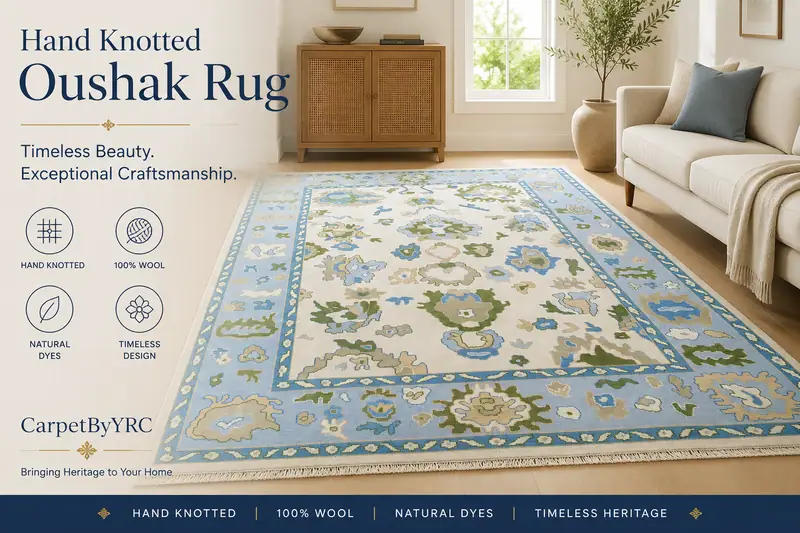
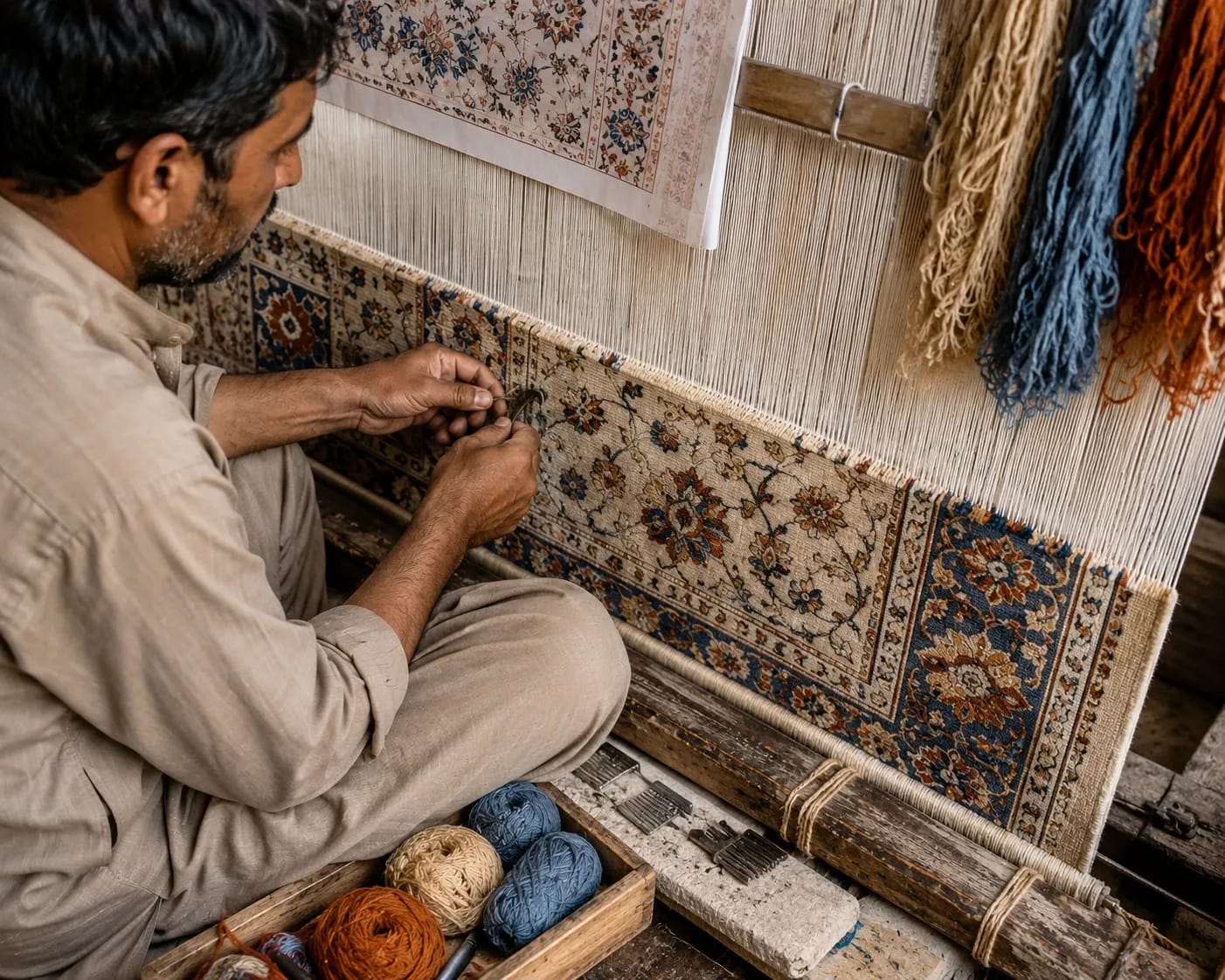
A hand-knotted rug is the highest expression of the Indian carpet-weaving tradition — created entirely by hand, one knot at a time, by skilled artisans who spend months or years completing a single piece. At Rug Store, we work with master weavers in Bhadohi, Uttar Pradesh — the carpet capital of India — to bring this craft to homes across the country. Whether you are buying your first hand-knotted rug or adding to a collection, this guide covers everything: how they are made, what separates quality from imitation, KPSI explained, materials, sizing, and care.
A hand-knotted rug is woven on a loom by tying individual knots — each one by hand — around the warp threads that form the structural backbone of the rug. The pile (the surface you walk on) is created by these knots, which are then cut to an even height and finished. Every single knot in the rug was placed by a human hand. There are no shortcuts.
This distinguishes hand-knotted rugs fundamentally from both hand-tufted rugs and machine-made carpets. In a hand-tufted rug, a tufting gun pushes loops of yarn through a backing canvas — fast and skilled, but a different process entirely. In a machine-made carpet, automated looms replicate weaving patterns at speed. Neither matches the structural integrity, lifespan, or artisanal character of a genuinely hand-knotted piece. For a detailed side-by-side comparison, see our hand knotted vs hand tufted comparison at rugstore.in/blog/hand-knotted-vs-hand-tufted-carpet-india/.
In a hand-knotted rug, the knots are the structure. The pile fibres are tied directly to the warp and locked in by the weft threads — there is no secondary backing, no adhesive, and no canvas between the weave and the surface. This is why genuine hand-knotted rugs are reversible (the back shows the knot pattern clearly), why they last generations, and why they improve with age rather than degrading. Browse our hand knotted carpet collection at rugstore.in/online-carpet-store/rugs-carpets/hand-knotted-carpets/.
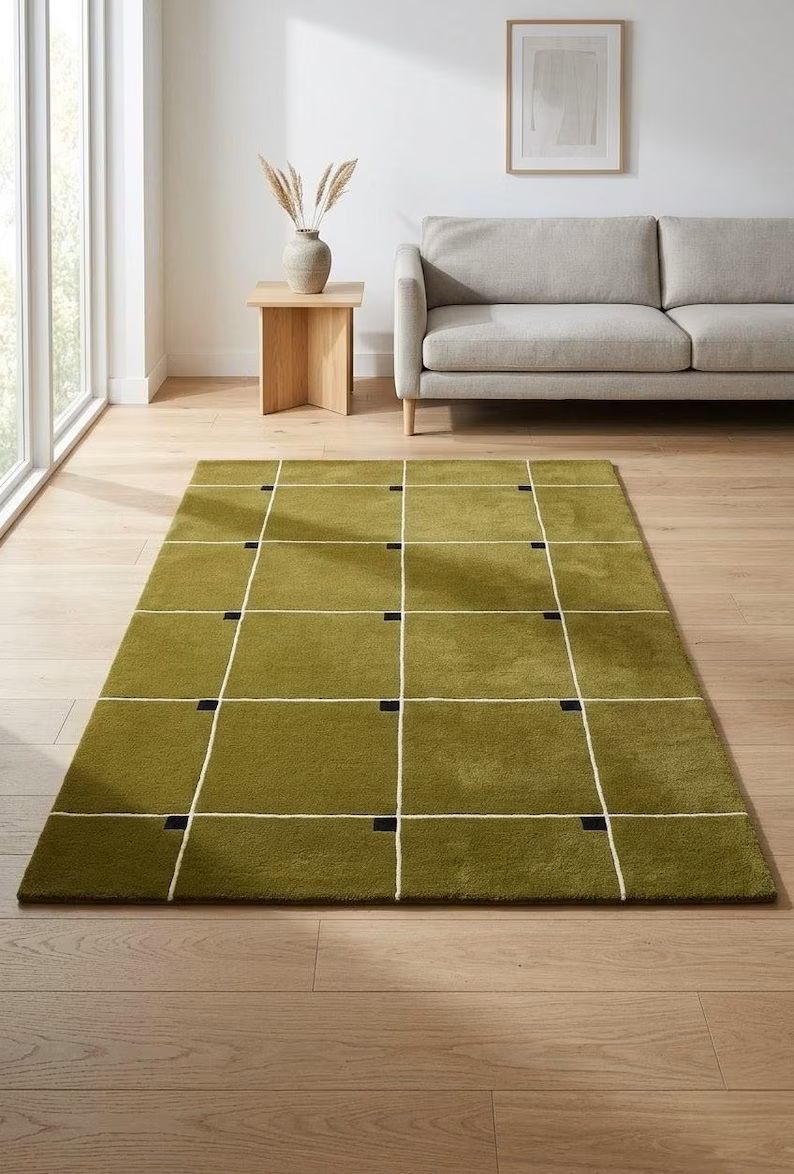
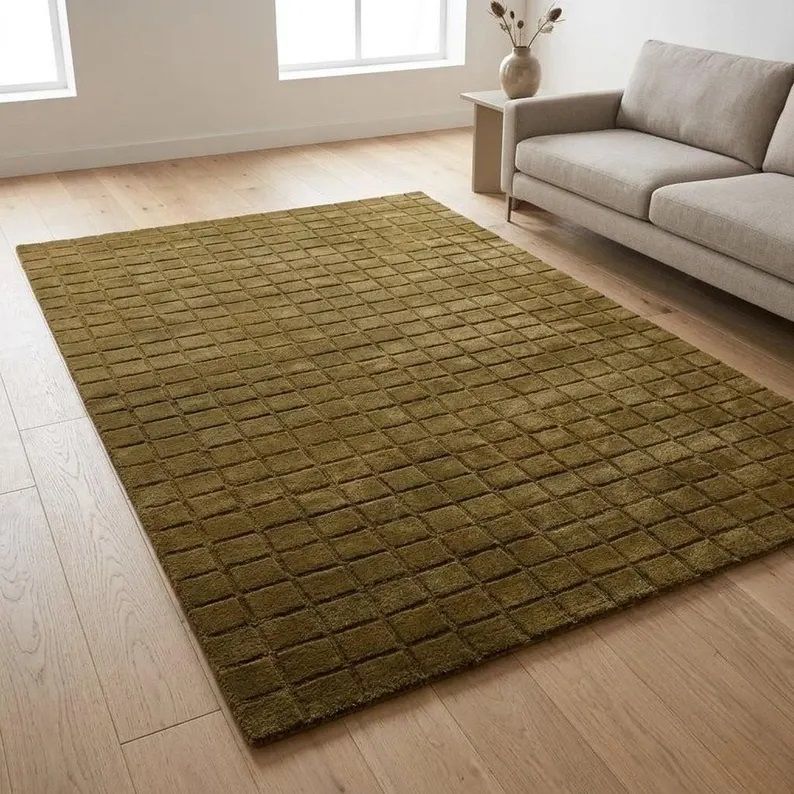
Hand-tufted rugs are excellent floor coverings — skilled, handmade, and available in far more complex designs at a fraction of the price of hand-knotted pieces. However, the latex backing used in hand-tufted rugs degrades over time (typically 10–20 years), the pile can shed, and the backing is not reversible. A hand-knotted rug, properly maintained, outlasts its owner. Both have a place in a well-furnished home. See our hand-tufted rugs collection at rugstore.in/online-carpet-store/rugs-carpets/hand-tufted-rugs/ if you are considering that category.
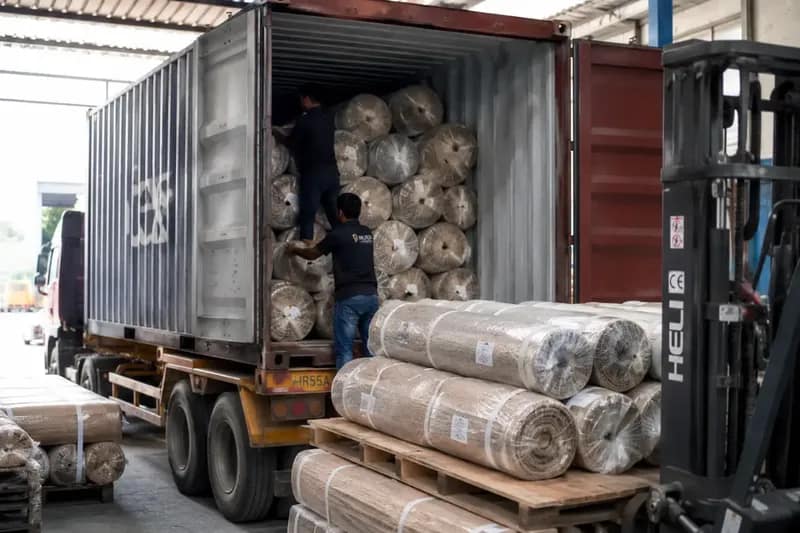
Bhadohi, in eastern Uttar Pradesh, is the centre of India's hand-knotted carpet industry — a tradition stretching back over four hundred years, rooted in Mughal-era patronage of Persian and Central Asian weaving techniques. Today, Bhadohi accounts for a significant share of India's carpet export and is home to thousands of weaving families who have inherited the craft across generations.
A single square metre of a medium-density hand-knotted rug contains roughly 40,000 to 160,000 individual knots, depending on the quality grade. A 6x9 ft rug at mid-range quality involves several million hand-tied knots. This is why hand-knotted rugs are priced as they are — and why they last so long.
KPSI stands for Knots Per Square Inch. It is the most widely used measure of a hand-knotted rug's fineness and the density of the weave. Higher KPSI generally means finer detail in the pattern, a tighter and more durable pile, and a rug that took more time and skill to produce.
When buying, do not chase the highest possible KPSI for a functional floor covering. A well-made 80–120 KPSI wool rug will outlast and outperform a poorly finished 200 KPSI piece. Ask the seller for the KPSI specification — any reputable supplier will provide it.
The material used for the pile is the single biggest determinant of a hand-knotted rug's character, feel, and suitability for a given room.
New Zealand wool and Indian highland wool are the most common pile materials for hand-knotted rugs made in Bhadohi. Wool is naturally resilient — the fibre's crimped structure allows it to spring back after compression, resisting matting even in moderate traffic. Wool is also naturally soil-resistant (the lanolin content repels dry soil), naturally fire-resistant to a degree, and comfortable underfoot in all Indian seasons. A quality wool hand-knotted rug is the right choice for living rooms, dining rooms, and bedrooms in most Indian homes.
Silk pile hand-knotted rugs are among the most refined objects produced by Indian weavers. Silk's natural lustre catches light differently from different angles, creating a characteristic play of colour and sheen. Silk also allows far finer knotting than wool — silk rugs above 200 KPSI are produced in Varanasi and parts of Bhadohi for the export and luxury markets. However, silk is not appropriate for high-traffic floors — it is fragile under heavy footfall and should be placed in low-traffic settings or used as wall hangings in some cases. Explore our silk rugs collection at rugstore.in/online-carpet-store/rugs-carpets/silk-rugs/.
A wool-silk blend — typically 70–80% wool with 20–30% silk highlights — is the most commercially successful premium option. The wool provides structural durability and body; the silk adds sheen and allows finer detailing in highlighted areas (floral motifs, borders, medallion centres). This is often the recommended material for a buyer who wants the visual luxury of silk without the fragility trade-off.
The Indian carpet market includes machine-made and hand-tufted pieces sold alongside or misrepresented as hand-knotted. These are not inferior products — but they are different products with different lifespans and price justifications. Here is how to tell them apart.
Turn the rug over. In a genuine hand-knotted rug, the back mirrors the front pattern in knot form — you can see individual knots, slightly irregular, forming the design. The backing is the weave itself. In a hand-tufted rug, the back is covered by a layer of canvas and often a felt or latex backing material — you cannot see the knot structure. Machine-made rugs have a uniform, perfectly regular machine-woven back with no pile knots visible.
On a genuine hand-knotted rug, the fringe at each end is an extension of the warp threads — it is structurally part of the rug. On machine-made or hand-tufted rugs, fringe is typically sewn on as a decorative element after manufacture. Pull gently at a fringe end: if it connects directly and continuously into the body of the rug, it is woven-in. If there is a seam or attachment point, it is applied.
Examine the back surface closely. Hand-knotted rugs show slight irregularities in knot size, row alignment, and colour transition — the natural product of human hands working. Machine-made rugs show perfect regularity. Hand-tufted pile, viewed from the back (past the backing), shows loops rather than tied knots. Minor irregularity on a hand-knotted back is a quality indicator, not a flaw.
Hand-knotted rugs are available in standard sizes and, from Bhadohi suppliers, in custom dimensions. The following size guidance applies for Indian room configurations.
For a comprehensive guide to rug sizing across room types and price tiers, see our carpet price guide at rugstore.in/blog/carpet-price-guide-india-2026/.
A well-maintained hand-knotted rug improves with age — the pile softens, the colours develop depth, and the structural wool fibres compact into a firmer, more resilient surface. The following care practices protect this investment.
Hand-knotted rugs should be professionally washed every one to three years depending on traffic and soiling. Traditional rug washing involves submersion, gentle agitation, thorough rinsing, and flat drying in controlled conditions — a specialist process that home washing machines cannot replicate safely. Never send a hand-knotted rug to a standard dry cleaner unfamiliar with natural fibre pile rugs. Seek out a specialist carpet cleaner who works with hand-knotted pieces.
Explore our full hand knotted carpet collection at rugstore.in/online-carpet-store/rugs-carpets/hand-knotted-carpets/. For guidance on how hand-knotted compares to hand-tufted in practice, see our hand knotted vs hand tufted comparison at rugstore.in/blog/hand-knotted-vs-hand-tufted-carpet-india/.
A hand-knotted rug is made by tying individual knots — one at a time — around the warp threads of a loom. The knots are the pile and the structure: there is no backing, no adhesive, and no canvas. A hand-tufted rug is made by pushing loops of yarn through a backing canvas using a tufting gun, then covering the back with a layer of latex and felt to hold the loops in place. Hand-knotted rugs last significantly longer (generations, not decades), are reversible, and carry a higher price. Hand-tufted rugs offer more design flexibility at a lower cost and are an excellent practical choice for most rooms. The choice depends on budget, expected lifespan, and intended use.
A genuine hand-knotted wool rug, properly maintained, lasts between 50 and 150 years — often passing through multiple generations of a family. This is not an exaggeration: antique hand-knotted Persian and Indian rugs from the 18th and 19th centuries survive in homes and museums today. The structural integrity comes from the knot-and-weft construction: the pile fibres are locked mechanically into the weave, with no adhesive or backing material to degrade. Regular cleaning, rotation, and proper rug padding are the primary factors that determine whether a given rug reaches its full lifespan potential.
For routine maintenance: vacuum weekly in the direction of the pile on a low-suction setting with no beater bar. For spills: blot immediately with a clean dry cloth, working from the edge toward the centre, using cold water and a tiny amount of pH-neutral soap only if needed. Do not rub, do not use hot water, and do not apply enzyme-based stain removers (which can damage wool fibres). For annual deep cleaning, take the rug to a specialist carpet cleaner experienced with hand-knotted natural fibre pieces — home washing machines and generic dry cleaners are not suitable for high-quality hand-knotted rugs.
Yes — if you are buying from a reputable source and the rug is genuinely hand-knotted at an appropriate KPSI for the material. Hand-knotted rugs are the only category of floor covering that appreciates in value over time. A quality piece from Bhadohi, properly maintained, will be worth more in thirty years than it costs today. Even from a purely functional standpoint, the cost-per-year of a hand-knotted rug that lasts 80 years is lower than that of a machine-made carpet replaced every ten years. The investment is justified when you buy genuine quality from a traceable source — which is exactly what we offer through our hand knotted carpet collection at rugstore.in/online-carpet-store/rugs-carpets/hand-knotted-carpets/.
For a functional living room or bedroom rug in an Indian home, 60–120 KPSI in a quality wool is the ideal range. This density supports moderate design complexity, produces a durable pile suited to regular foot traffic, and represents the best balance of quality and value. Rugs below 40 KPSI are suited to high-traffic areas where a thick, robust pile is more important than pattern finesse. Rugs above 200 KPSI are primarily for collectors, connoisseurs, or low-traffic display settings. Do not let a seller convince you that the highest KPSI is always best — for a family living room, 80–100 KPSI wool will outperform a 300 KPSI silk rug placed where it does not belong.
Explore
Handcrafted rugs from verified Indian artisans and sellers — traditional weaves, modern designs, and everything in between. Delivered to your door.
Browse the Collection-800x451.webp&w=1920&q=72)