Best Rugs for Indian Weather — Season-by-Season Guide 2026
India has one of the most climatically diverse environments in the world — blazing summers above 45°C in Rajasthan, monsoon humidity approaching 90% in Mumbai, and biting North Indian winters where morning temperatures drop below 5°C in Delhi. Choosing the best rugs for Indian weather therefore means choosing differently across seasons and across cities. There is no single "perfect Indian carpet" — but there is a perfect carpet for your season, your city, and your room.
At Rug Store, we manufacture all our carpets in Bhadohi, Uttar Pradesh and have spent years matching materials and pile types to the Indian climate. This season-by-season guide tells you exactly what to buy and what to avoid.
Best Rugs for Indian Summer (March–June)
Indian summer is defined by heat, dust, and dry air. The priorities for a summer rug are: low thermal mass (does not retain heat), dust resistance, easy cleaning, and breathability. Heavy wool high-pile rugs are the worst choice for Indian summer — they trap heat and dust.
Jute Rugs — The Best Summer Carpet Material in India
Jute is a natural plant fibre grown abundantly in India, and it is the single best summer rug material for Indian homes. Jute has a naturally low pile (flat to low), excellent air circulation, and does not retain heat. It also has an inherent earthy, natural aesthetic that complements Indian interiors beautifully.
Jute tensile strength is approximately 200–700 MPa (depending on fibre grade) — making it one of the strongest natural plant fibres available. Despite being low-maintenance and lightweight, jute rugs are highly durable under normal foot traffic. They are best placed in living rooms and dining rooms during summer months.
One important note for Indian summers: jute is hygroscopic and should not be used in bathrooms or areas with standing moisture. It is ideal for dry-summer cities like Delhi, Jaipur, and Pune. Browse our jute rugs collection for summer-ready options.
Cotton Flat-Weave Rugs
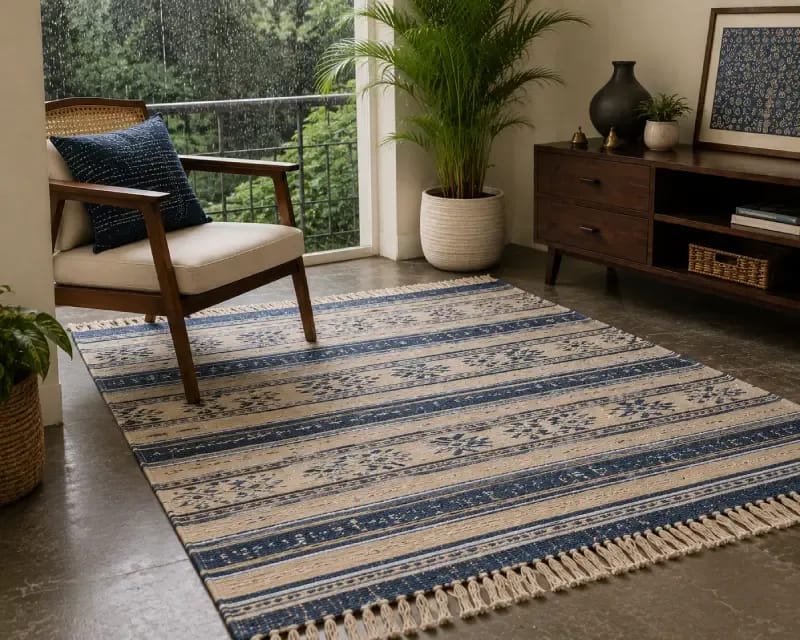
Cotton rugs — particularly flat-weave dhurrie styles — are the other great summer choice. They are lightweight, washable, and breathable. Cotton does not trap dust as readily as high-pile synthetic rugs, making it ideal for the dusty North Indian summer. Many Indian homes traditionally use cotton dhurries in summer and switch to wool carpets in winter.
Low-Pile Hand-Tufted Rugs in Wool or Viscose
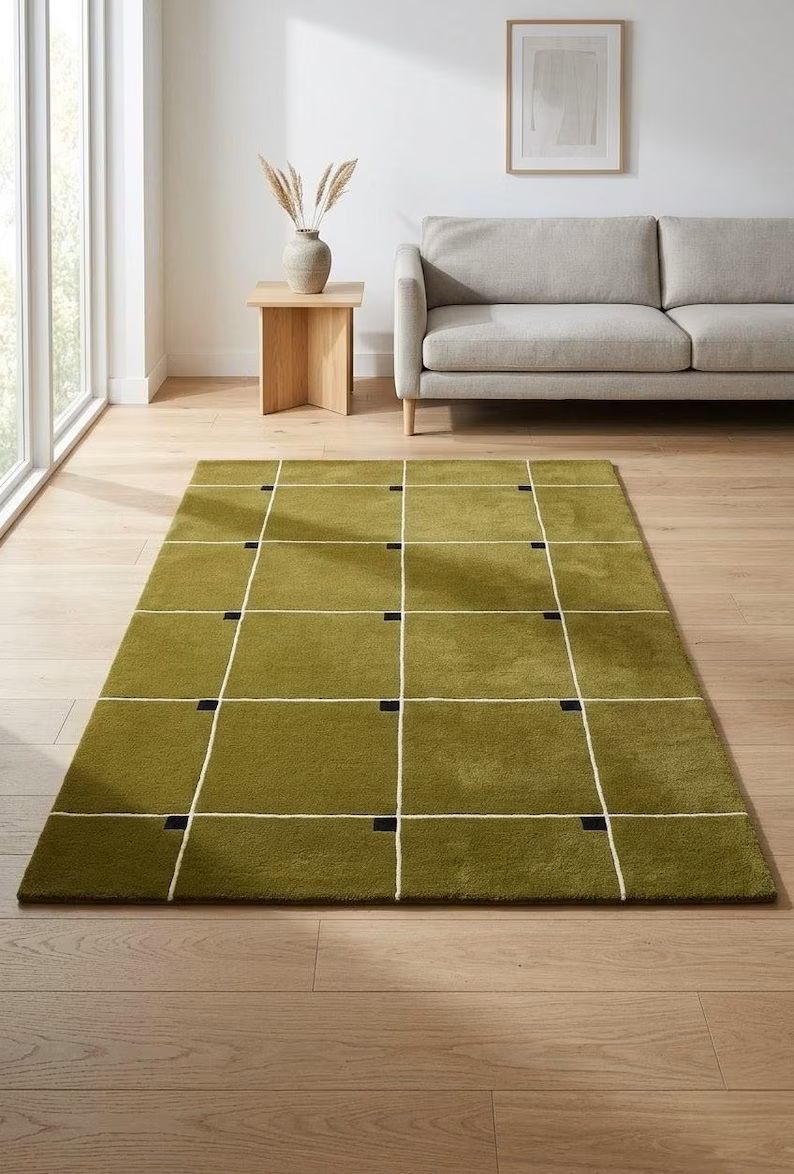
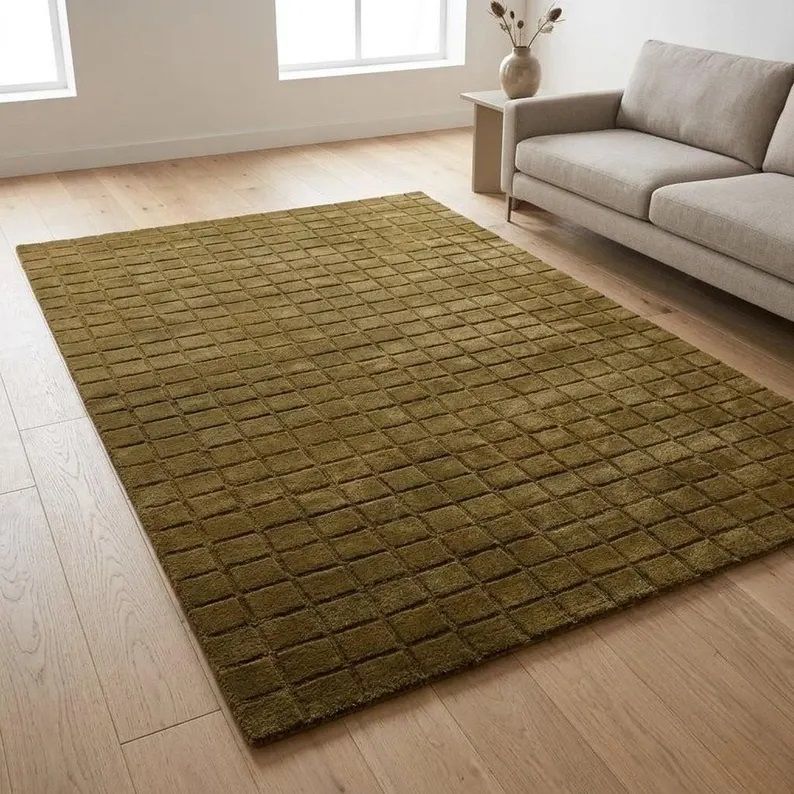
A low-pile (5–10mm) hand-tufted rug in wool or viscose is a year-round option that performs well in Indian summer, especially in air-conditioned rooms. The low pile height minimises heat retention and makes vacuuming easy — essential in summer when dust levels peak.
Viscose rugs are particularly popular in Indian living rooms during summer because the silk-like sheen reflects light and keeps the room feeling fresh and bright.
Best Rugs for Indian Monsoon (July–September)
Monsoon is the most challenging season for carpets in India. High humidity — up to 90% in coastal cities — creates conditions for mould, mildew, and bacterial growth under and within carpets. The key priorities for monsoon rugs: moisture resistance, fast-drying pile, and easy cleaning.
What to Avoid During Monsoon
- High-pile wool rugs: Wool absorbs moisture readily and takes a long time to dry — ideal conditions for mould formation.
- Jute rugs in coastal cities: In Mumbai, Chennai, or Kochi, jute absorbs ambient humidity and can develop an earthy, musty smell during peak monsoon.
- Placing rugs in entryways during monsoon: The entryway accumulates the most tracked-in moisture. Use a coir doormat and keep good carpets away from wet entry zones.
Best Monsoon Rug Choices
Synthetic low-pile rugs in polypropylene or nylon are the most monsoon-resistant options — they do not absorb moisture, dry quickly, and resist mould. These are practical choices for monsoon, though they lack the craft quality of handmade options.
If you insist on handmade rugs during monsoon, opt for a low-pile hand-tufted rug in viscose or a cotton flat-weave. Keep the rug well-ventilated — especially in Mumbai and Chennai apartments where airflow can be limited.
Use rug pads with non-slip mesh (not solid rubber) during monsoon — mesh pads allow airflow under the rug, preventing moisture accumulation.
Best Rugs for North Indian Winter (November–February)
North Indian winters — particularly in Delhi, Lucknow, Chandigarh, and Jaipur — can be severe. Temperatures drop below freezing in January, and cold marble and stone floors are genuinely uncomfortable without a carpet. This is when high-pile, warm materials earn their keep.
Wool Carpets — The Best Winter Rug in India
Wool is nature's perfect insulator. Wool pile traps air between its fibres, creating a thermal barrier between your feet and the cold floor. The higher the pile — the better the insulation. A 15–20mm pile wool carpet can meaningfully raise perceived room temperature in a North Indian winter, reducing heating costs.
Our hand-tufted wool carpets are made using New Zealand wool blended with Indian wool. New Zealand wool has a slightly longer, finer staple that gives a more luxurious handle; Indian wool adds density and volume. The combination is perfect for Indian winter use.
Browse our hand-tufted rugs collection for wool and wool-blend options — these are our bestsellers from October through February in Delhi, Lucknow, and Chandigarh.
Shaggy Carpets for Winter
Shaggy rugs with a pile height of 25mm or more are the most popular winter bedroom carpet across India. The deep pile creates maximum warmth underfoot and gives a visually cosy, cocoon-like atmosphere during cold months. Our shaggy rugs come in a range of winter-appropriate colours — deep wine, warm charcoal, rich taupe.
For placement during winter: put a shaggy carpet beside the bed, under a sitting chair, or in front of a sofa. These are the zones where bare feet touch the floor most frequently.
Silk and Viscose Rugs in Winter
Silk and viscose rugs do not offer the same thermal insulation as wool, but they add elegance to formal living rooms during the winter entertaining season (Diwali through New Year). Their sheen catches the warm light from diyas and string lights particularly beautifully.
Best Rugs for South and West Indian Climates
Cities like Mumbai, Bangalore, Hyderabad, Chennai, and Kochi have distinct climatic profiles — humid coastal weather, high year-round temperatures, and significant variation between monsoon and non-monsoon periods.
Mumbai and Chennai
These high-humidity coastal cities need the most moisture-resistant rug choices year-round. Jute is suitable in the non-monsoon months (November–May) in well-ventilated rooms. Low-pile hand-tufted viscose or cotton rugs are the safest year-round choices. Avoid wool in humid ground-floor apartments.
Bangalore
Bangalore's famously temperate climate makes it the ideal city for year-round use of almost any rug type. The city rarely gets very hot or very cold. Hand-tufted wool-viscose blends, jute, and medium-pile shaggy rugs all perform well year-round in Bangalore homes. Browse our collection to find the best rugs for Bangalore apartments and independent houses.
Hyderabad
Hyderabad has hot summers and relatively mild winters. Jute and low-pile hand-tufted rugs are ideal for summer. Medium-pile wool rugs are appropriate for the brief winter (December–January). Year-round, modern carpets in low-to-medium pile viscose are popular in Hyderabad's contemporary apartment culture.
Season-by-Season Rug Recommendation Summary
- Summer (Delhi, Jaipur, Lucknow): Jute rugs, cotton flat-weave, low-pile viscose hand-tufted
- Monsoon (Mumbai, Chennai, Kochi): Low-pile viscose or synthetic; avoid jute; use mesh rug pads
- Winter (Delhi, Chandigarh, Lucknow): Wool hand-tufted, shaggy rugs, high-pile options
- Year-round moderate (Bangalore): Any material in medium pile; wool-viscose blend is ideal
- Year-round humid (Mumbai, Chennai): Low-pile cotton or viscose; avoid high-pile wool
Shop our full range — hand-tufted rugs, jute rugs, shaggy rugs, bedroom carpets, and living room carpets — all available with free delivery across India.
Frequently Asked Questions — Best Rugs for Indian Weather
Which carpet is best for Indian summer?
Jute rugs and cotton flat-weave rugs are the best choices for Indian summer. They have low pile, excellent breathability, and do not retain heat. Low-pile viscose hand-tufted rugs are also suitable for air-conditioned rooms.
Are jute rugs good for monsoon?
Jute rugs are suitable during monsoon in dry interiors (Delhi, Pune, Bangalore). They are not recommended for coastal cities like Mumbai or Chennai during monsoon, where ambient humidity can cause jute to absorb moisture and develop a musty smell.
Which rug is best for winter in India?
Wool hand-tufted and shaggy rugs with pile heights of 15mm+ provide the best thermal insulation for North Indian winters. These are ideal in Delhi, Lucknow, Jaipur, and Chandigarh where floor temperatures drop significantly in January and February.
Can carpets get mould in Indian monsoon humidity?
Yes — especially high-pile wool rugs in coastal cities or poorly ventilated rooms. To prevent mould: use a mesh rug pad for airflow, vacuum weekly during monsoon, air the rug periodically, and avoid placing rugs in zones that collect tracked-in water.
What is the best rug for a Mumbai flat?
Given Mumbai's year-round humidity, low-pile viscose or cotton hand-tufted rugs are the most practical choice. They do not absorb ambient moisture, dry quickly if wet, and are easy to clean. Avoid wool in ground-floor or poorly ventilated Mumbai apartments.
Do Bangalore homes need carpets in winter?
Bangalore winters (December–January) are mild compared to North India, but mornings can be chilly. A medium-pile wool or wool-viscose blend carpet in the bedroom or living room adds comfort and warmth during Bangalore winters without being excessive.
-800x451.webp&w=1920&q=72)